Observed each April, Language Access Month has become an important annual moment for organizations to advance equitable communication across spoken, signed, and written languages.
For organizations across government, healthcare, education, enterprise, and public services, this month is more than a symbolic awareness moment.
It is a strategic reminder to evaluate a much bigger question:
Can every person truly understand your information in the way they naturally communicate?
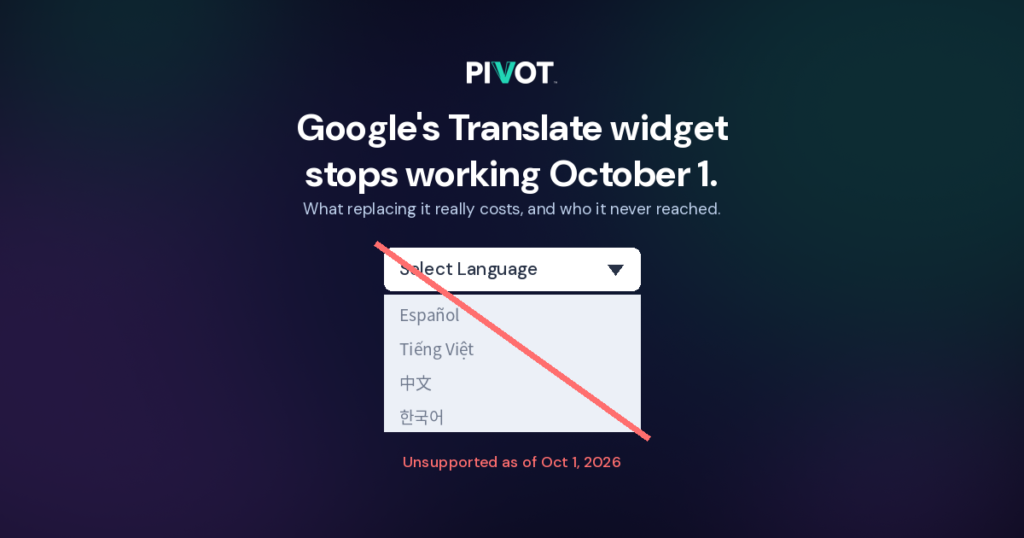
Too often, language access is still treated as text translation alone.
But in today’s digital environment, that outdated model creates:
- rising support costs
- lower conversion
- poor customer experience
- delayed service uptake
- compliance exposure
- fragmented accessibility workflows
- reduced trust
Because language does not stop at text.
It is also:
- signed
- spoken
- auditory
- visual
- modality-driven
And when organizations fail to account for that reality, the cost compounds across every touchpoint.
Why Language Access Month Matters
Language Access Month matters because communication barriers still shape how people engage with critical digital information every day.
These barriers affect:
- healthcare instructions
- emergency alerts
- public benefits enrollment
- customer onboarding
- HR portals
- product tutorials
- financial disclosures
- support centers
- public service workflows
- internal enterprise systems
When users cannot understand information at the source, the burden shifts elsewhere.
Organizations absorb the cost through:
- increased ticket volume
- repeat hotline calls
- longer support handling times
- abandoned workflows
- slower adoption
- churn risk
- escalated legal and compliance review
- reduced satisfaction scores
This is not just an inclusion issue.
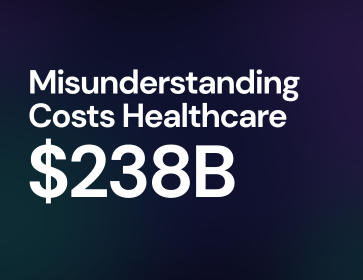
It is a business and infrastructure issue.
The Real-World Language Access Gaps Still Costing Organizations
The most expensive language access failures happen in high-stakes real-world moments.
Healthcare
A patient receives medication instructions only in written English.
But their strongest communication preference may be:
- signed language
- spoken audio in another language
- text plus audio reinforcement
When the format does not match comprehension needs, organizations face:
- avoidable readmissions
- medication misuse
- increased patient support burden
- delayed recovery outcomes
Government + Public Sector
Residents rely on fast access to:
- emergency weather alerts
- transportation updates
- disaster resources
- housing applications
- benefits systems
- public health guidance
If this information exists only in text-heavy webpages or downloadable PDFs, agencies often see:
- higher call center volume
- reduced service uptake
- delayed response
- lower public trust
- case escalations
Every inaccessible workflow creates downstream operational cost.
Enterprise + Customer Experience
In enterprise environments, incomplete language access often surfaces through avoidable support interactions.
When users cannot understand:
- onboarding flows
- claims processes
- checkout steps
- warranty instructions
- internal training
- employee benefits enrollment
- compliance documentation
they leave self-service workflows and contact support.
This drives:
- more tickets
- longer resolution times
- higher support spend
- lower completion rates
- preventable churn
The economics add up quickly.
Language Does Not End at Text
This is where the industry must evolve.
Many organizations still define language access as:
written translation only
But millions of people primarily consume information through:
- signed language video
- spoken audio
- text in their preferred language
- combinations of all three
This includes:
- Deaf communities
- multilingual users
- audio-first mobile users
- low-literacy populations
- aging adults
- neurodivergent users
- global audiences navigating fast-moving information
True language access means allowing users to choose how they understand information best.
Because understanding is modality-dependent.
The Hidden Cost of Text-Only Language Access
When organizations rely on incomplete language access models, the cost rarely disappears.
It simply moves into:
- support operations
- CX teams
- remediation projects
- compliance reviews
- legal risk
- repeat communications
- lower conversion
- missed enrollment
- reduced retention
This is why text-only translation is no longer enough.
The future requires signed, spoken, and written communication directly in the digital experience.
The Future of Language Access Is Built Into the Interface
Modern language access should not require:
- duplicate webpages
- separate ASL pages
- disconnected PDFs
- siloed translation workflows
- external video libraries
The future is one seamless multimodal experience directly where information lives.
As Dawnena Key, CTO of PIVOT, shared:
“The breakthrough was engineering signed languages, audio, and text directly into the interface layer, because accessibility belongs in the architecture itself.”
That is the shift Language Access Month should inspire.
From:
translation as an afterthought
To:
understanding as digital infrastructure
How PIVOT Helps Organizations Close Language Access Gaps
PIVOT is the award-winning infrastructure layer for modern language access.
The platform enables organizations to deliver:
- signed language video
- spoken language audio
- written translations
directly within websites, portals, and digital interfaces.
This transforms fragmented communication workflows into:
- better UX
- lower support costs
- stronger compliance readiness
- scalable multilingual experiences
- more equitable access to digital information
Because the future of communication is not just availability.
It is understanding at the source.
Language Access Month Is a Call to Rethink Digital Communication
This April, the question is no longer:
“Do we offer translated text?”
The better question is:
Can every person understand our information across signed, spoken, and written communication formats directly where it lives?
Because language does not stop at text.
And the organizations that evolve now will define the future of digital communication.
Ready to modernize language access?
See how PIVOT transforms websites and digital platforms into multimodal communication infrastructure.
Book a demo: hello@gopivot.me
Learn more: www.goPIVOT.me